Information
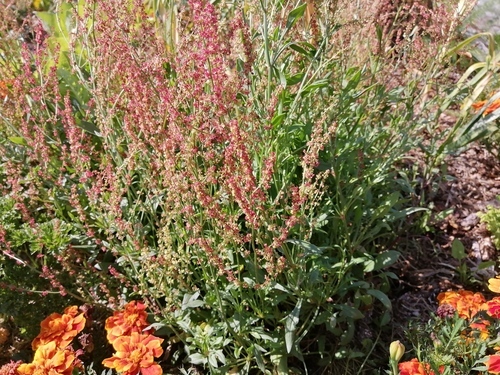
Sheep Sorrel (rumex acetosella) is one type of garden sorrel that you'll often see growing wild. It has the smallest leaves of all the sorrels, and is one of the most medicinal.
It is said to be one of the strongest antioxidant herbs available. Antioxidants have the ability to deal with free radicals caused by foods, pollutants,
and stress, and provide a strong line of defense for the immune system.
Sheep Sorrel is said to be anti-tumour, so has traditionally been used as part of a formula in treating cancer, especially during chemo or radiotherapy.
"Plant extract from Rumex Acetosella showed particularly strong anticancer capabilities since it inhibited actual tumor progression in a breast adenocarcinoma mouse model" in this study in Iraq.

While there have been no clinical trials using sheep sorrel, anecdotal reports claim to be promising in supporting those recovering from cancer, treating symptoms of digestive disorders, reducing inflammation and pain, helping to treat respiratory problems, and supporting detoxification.
It may be immune-modulating, so could also be helpful during times of poor immunity, and for HIV/AIDS.
Sheep Sorrel may assist the body in throwing off viral infections. It is rich in vitamin C, and has been used to treat scurvy for centuries.
Sheep Sorrel has traditionally been valued in treating urinary and kidney complaints, and to strengthen the heart health, boosting red blood cell production and oxygen levels in vital organs.
Sheep Sorrel may be helpful in inflammatory conditions connected to respiratory problems such as sinusitis. The tannins present in sheep sorrel are believed to help decrease the overproduction of mucus.
Externally, crushed, fresh leaves can be applied as a poultice to boils and carbuncles.
All parts of the herb are edible. It can be used like spinach: in salads, stir-fries, marinades, soups, and casseroles. It pairs well with fish, as well as cream, yogurt, and cheese. The root can be cooked, and also dried and ground into a powder, then added to other flours for bread. The seeds can also be eaten raw or cooked.
Contraindications: Patients with a history of kidney stones should not consume this herb.
All sorrels contain oxalic acid, which can be reduced by cooking, or adding yoghurt to it. But use in moderation if you have rheumatism, arthritis, gout, kidney stones or hyperacidity.
Sheep sorrel spreads fairly quickly by roots, so plant it in a spot you don't mind it growing; in a food forest, to cover a bank, as ground cover etc. It is easy care, likes full sun, is drought hardy and can grow in poor soil.
Organically grown herb in a recycled or compostable pot.
This is not intended as a substitute for professional medical advice. It is advised to consult with a healthcare professional, especially if you have any existing health conditions or are taking other medications. No health claims are intended, implied or otherwise; use at your own discretion.
Stock Notifications
Details of the product above will be automatically included with your enquiry.
View your shopping basket or Browse other items in Herb Plants.