
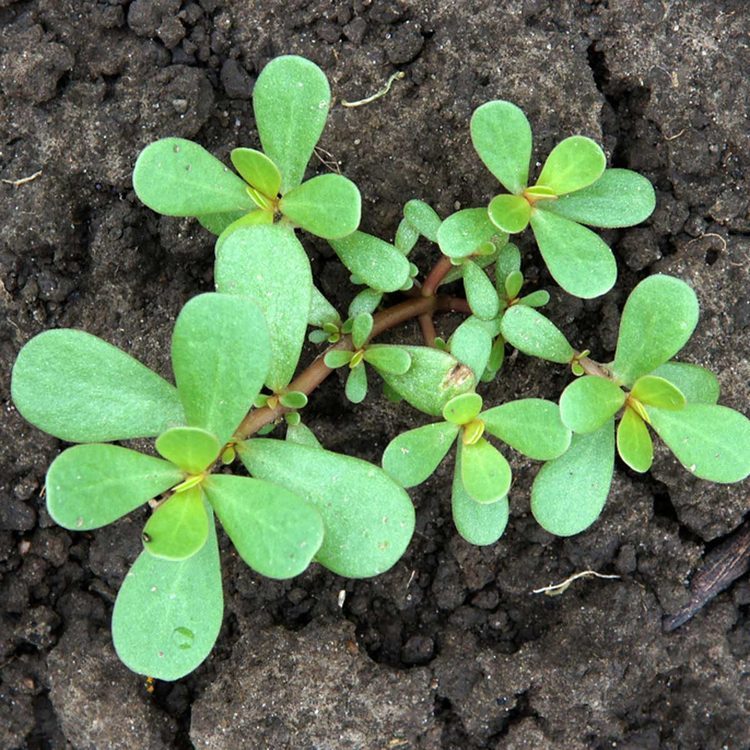
Information
Purslane is rich in various antioxidants and beneficial plant compounds like vitamin C, E, A, Glutathione & Melatonin.
It is a good source of potassium, magnesium, calcium, zinc, phosphorus & iron.
It also has oxalates, so if you are concerned about oxalate content, try adding it to yogurt, which has been shown to significantly reduce the amount of oxalates.
Recent research demonstrates that purslane has better nutritional quality than the major cultivated vegetables, with higher beta-carotene, ascorbic acid, and alpha-linolenic acid. Additionally, purslane has been described as a power food because of its high nutritive and antioxidant properties
Calorie for calorie, purslane is one of the most nutrient-dense foods on earth!

Purslane has been used in traditional Chinese medicine for
millennia, where it is called the “vegetable for long life.” It is used to cool the blood,
stop bleeding, clear heat, and neutralize toxins. Aerial parts
of the herb were indicated for treatment of fever, dysentery, diarrhea, carbuncles
(a cluster of boils), eczema, and hematochezia (blood in the stool).
In Western herbal medicine, purslane has been indicated topically for
burns, eczema, insect bites, and boils, and internally, the leaves, stems, and flowers have been used for edema,
anaemia, atherosclerosis, stomach & liver disorders, ulcerative colitis, eye disorders, coughs and shortness of breath, and
muscle spasms.
The seeds have been used for restless
sleep, cholecystitis (gallbladder inflammation), joint pain, syphilis,
arthritis, and psoriasis, while the juice has been used as an adjunct
treatment for dysentery, intestinal worms, sexually transmitted
infections, and warts.
How to use Purslane - Purslane is usually tossed into salads or added to soups in the Mediterranean area. In Mexico, it’s a favorite addition to omelettes. Purslane can also be lightly steamed for 4 to 5 minutes, then served with salt and a little butter. Purslane goes very well mixed with cucumber and topped with some oil-and-vinegar dressing. Also try adding purslane to smoothies or juicing it.
North American people powdered the seeds for use as a flour, dried the
stems for winter rations, and used the plant to feed sheep.
Purslane is often used as fodder for livestock and poultry. Due to the
nutrient-dense nature of purslane, chickens that consume the aerial
parts produce eggs with a high omega-3 fatty acid content.
For external use, pulp the raw herb and apply where needed, with a bandage over the top to keep it in place.
It's a herb that you definitely want growing on your whenua!
All our herbs are organically grown in a recycled or compostable pot.
Stock Notifications
Details of the product above will be automatically included with your enquiry.
View your shopping basket or Browse other items in Herb Plants.