Information
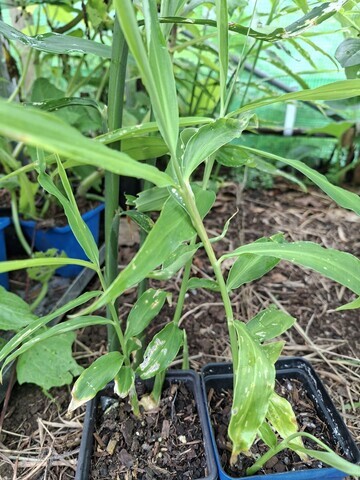
Common Ginger (Zingiber officinale) has been used for over 5000 years. Originating in Asia, it was traded along the Silk Road to Rome, used as a medieval plague remedy, and later valued for aiding digestion and treating inflammatory conditions.
It is used as a general tonic for the digestive system to ease nausea - including motion sickness, those undergoing chemotherapy and pregnancy-related morning sickness - to prevent griping, for indigestion, bloating, diarrhoea and vomiting.
It has also been used to expel worms and to treat delayed or painful menstruation.
For colds and flu, it's warming effects are incredibly soothing for sore throats, and to clear sinuses and the chest from phlegm due to it's high antiviral and antibacterial properties.

Ginger contains strong anti-inflammatory compounds that can reduce muscle pain and joint stiffness associated with arthritis and rheumatism.
And of course it can be used in all kinds of cooking. We especially love a fresh ginger, lemon and honey tea if under the weather!
Growing conditions: Ginger plants like to grow in full sun, with free-draining, moist soil that is rich with organic matter & mulch. Don't let them get too dry, especially across the warmer months. In cooler regions, do not allow your ginger to sit wet over winter.
Harvesting: In colder climates, make sure you harvest all your ginger before the first frost. In warmer climates, harvest when the leaves turn yellow and the stems start to fall over.
Organically grown herb, in a compostable or recycled pot.
Stock Notifications
Details of the product above will be automatically included with your enquiry.
View your shopping basket or Browse other items in Herb Plants.