
Information
Comfrey is a well known companion plant with many edible and medicinal uses too – every garden should have some!
Comfrey is said to be more nutritious than soybeans. It has a great balance of the major plant nutrients nitrogen, phosphorus and potassium, but is known in particular for its accumulation of potassium (2 to 3 times more than manure). It also contains silica, magnesium, calcium, iron, vitamin A & C, high protein and B12. It is said to be one of the rare herbs that processes B12 from the soil.
These nutrients will be naturally cycled through the soil as it dies down each winter but a well watered and fertilised patch can be harvested 3-5 times a season.
The leaves can be used to make a liquid fertiliser, added to the compost heap or wilted and used to line potato trenches.
Comfrey can also be grown around fruit trees as a ground cover (as in the picture) and slashed several times a season to mulch the tree. The flowers are excellent for bees and other insects also!
The roots and leaves can be used medicinally externally as a poultice. Comfrey is particularly known for its healing properties for skin complaints such as eczema and for cuts, bruises and sprains, and is most well known for it's role in healing broken bones, hence the old name of 'Knit-bone'.
Not recommended for internal use; external use only.
The fresh leaves make a great addition to chicken feed, are loved by geese, and have been used as stock fodder for many years.
Plant comfrey in full sun or part shade.
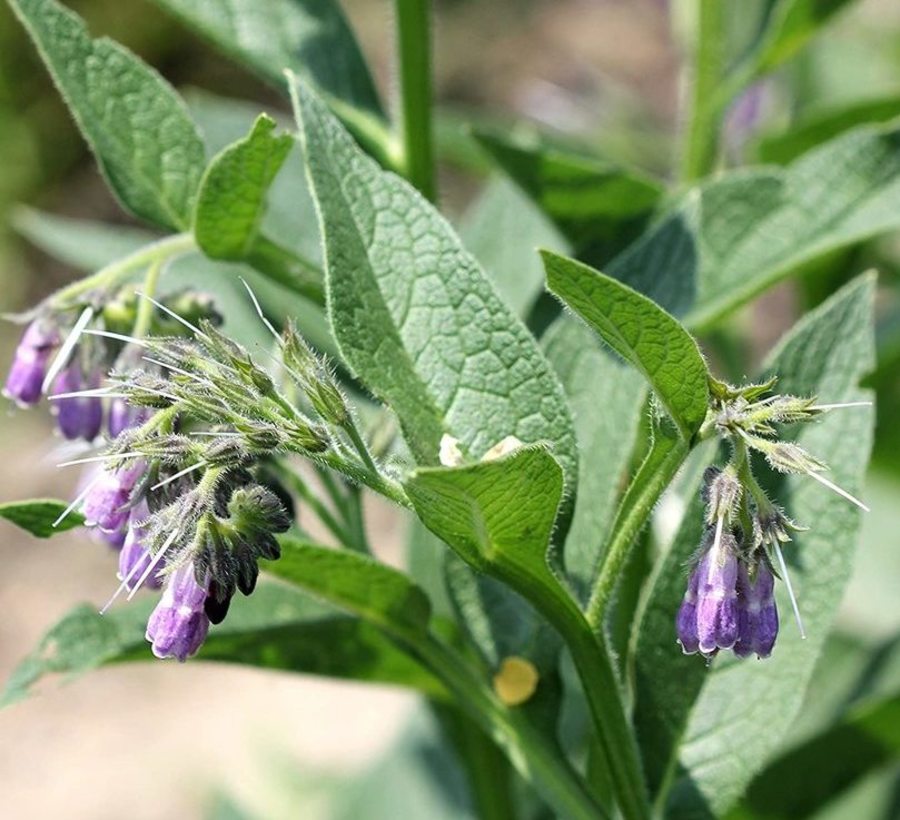
Russian Comfrey (Symphytum x uplandicum) is a sterile version of comfrey and does not spread by seed (only by root) but plant it where you want it – it’s impossible to remove the deep chunky taproot! Height to 75cm when in flower – pretty lilac-pink bells in summer.
True Medicinal Common Comfrey (Symphytum officinale) is a fertile comfrey and will spread by seed and root, so be careful where you plant it. The leaves are narrower and smaller and the flowers are a stunning, vibrant purple from spring onwards. The roots are longer and bigger than russian comfrey also.
Medicinally they have similiar properties, although Common Comfrey shows to have less or none of the pyrrolizidine alkaloids echimidine and symlandine that are hepatotoxic and limit internal use.
Herbalist Dr. Marisa Maraciano writes: "The current debate about whether to use symphytum internally is due to concern over the pyrrolizidine alkaloids, specifically the echimidine alkaloid found primarily in the root. Toxicity reports are based on isolated compounds, not on the whole plant usage. The plant has centuries of use with beneficial results"
(Please note that we cannot recommend internal use of Comfrey in NZ)
So for medicinal purposes, choose Common Comfrey if you need it for traditional medicinal purposes and are prepared to manage its potential to spread through seed.
And choose Russian Comfrey for large-scale composting or biomass, as its sterility prevents it from spreading uncontrollably via seed.
Organically grown plants. Contact us for pricing for bulk smaller grades.

Organically grown, in a compostable or recycled pot.
Stock Notifications
Details of the product above will be automatically included with your enquiry.
View your shopping basket or Browse other items in Herb Plants.