Information
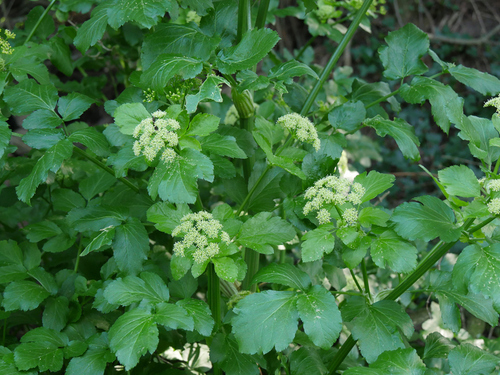
Alexanders (smurnium olusatrum), sometimes called Black Lovage or Wild/Horse Celery, has been found recorded through history from Roman times (likely much earlier), as being edible, and for it's use in stomach issues, as well as liver and spleen.
It was considered a vegetable not to be without in France, where it was added to winter salads and oatmeal.
Alexanders was carried on ships as a remedy against scurvy.
It become abundant in English gardens, used much like celery and lovage.
Culpeper says "It warmeth a cold stomach and openeth a stoppage to the liver and spleen. It is a herb of Jupiter and therefore friendly to nature."
It fell out of fashion when modern versions of celery become more popular, and herbalists used fennel and aniseed for digestion instead. But it really does need to be reintroduced into gardens again, as the entire plant is edible, tasting similar to parsley & celery, it's fed to stock, and can make syrups, wine & beer.

Medicinally, Alexanders is used to settle upset, gripy, gassy stomachs (similar to fennel and aniseed). It can also be helpful for wai whero (menstruation), to expel afterbirth, to boost immunity, to stimulate the bladder and kidneys, having been used historically to treat kidney stones, gallbladder stones, and urinary tract infections.
Externally it can be used for wounds and cuts, as well snakebite. Crush the leaves and apply the juice and leaves.
In food, you can use the leaves, stems and young shoots as you would celery & parsley, raw in salads and pesto or added to soups, pies & omelettes. Cooking the young leaves and stems, then adding butter and lime juice is delicious!
The stems can also be cooked like asparagus, steamed or boiled for 5 to 10 minutes, and served as a side dish.
You can eat the flower buds pickled, cooked or raw, and use the flowering tops as you would broccoli. Also use the flowers as spice and decoration in salads.
The roots are added to soups and pies, or winter salads, roasted and fried.
Alexanders is a rich source of vitamin C, as well as protein, carbohydrates, and fatty acids.
In the garden, it attracts beneficial insects; it's perfectly placed under fruit trees in your orchard!
There is historical mention of Alexanders being used as a source of fuel, bundled into stalks.
It is definitely a great herb to have growing in your food forest or maara!
Organically grown, in a compostable or recycled pot.
View your shopping basket or Browse other items in Herb Plants.